
I have been pondering a way to get back into writing short, theoretically rich yet easily consumed essays. And, it hasn’t been easy. I think I said most of what I wanted to say about teaching theory – two or three years later, nothing has changed in the sociological landscape. As I thought about this off and on for a few years, I decided that the logic of sociocultural, historical change was a good theme to think about for a return to this style of writing.
What has long struck me about sociology, at least until relatively recently, is its linearity. By this, I mean social change tends to move directionally, whether analysts explicitly lay out this assumption or not. For evolutionary and historical sociologists, this means epochs fade into new epochs like geologists studying eras transitioning to new eras. For activist-types, the promise of utopia saturates the various critical perspectives, presuming that we are always progressing towards something; even if it is just out of reach.
This makes sense to some degree because of the cultural reality we inherit. American democracy, for instance, is very often presented as a project continuously moving towards perfection. Christianity, Islam, and Judaism all present an eschatological and soteriological vision that parallels the life course beginning at birth and ending at death. Each of these has a starting point at which there was nothing until God imposed order. Like the evolution from foraging to modern human societies, humans have been moving morally and spiritually towards an end. Even our understanding of human evolution takes a linear view: primitive homo sapiens lived in small, foraging, undifferentiated societies and slowly passed through various stages towards greater complexity. When we telescope out and read the past through the lens of the future, it is difficult to imagine it otherwise, even if each modern state and culture identifies a specific time and place for its origin story. Indeed, our own psychological and social psychological folk theories are rooted in the linear progression from childhood to young adulthood to old age. Sociologists once called this process a moral career (Goffman 1961:150ff.) to signify the phasic nature of one’s self-conception and social self moving through the given institutional reality.
I am reminded of a clever movie I saw once, a low budge movie called The Man from Earth. [SPOILER ALERT]. The movie is an interesting intellectual exercise that asks a big question about human evolution: how did we get from there (human societies that emerge 300,000 years ago and showed little change until the last major ice age ended about 12,000 years before the present) to here (2007 as it were)? The main character, a professor of anthropology, is at a dinner party with faculty friends from different departments, including his wife. He reveals he is leaving the academy, the university, and his wife, but not before dropping a bombshell on them: he is about 14,000 years old. His life story is a metaphor for the human story in linear form. As a forager, he was an infant. Technology is simple, and while foragers had an encyclopedic understanding of the natural world, their grasp over the physical universe was admittedly infantile. Myths were epistemic explanations of things science has made us take for granted. As he lived longer, he gained more and more knowledge, moving from one place to another. His cumulative knowledge eventually became world-shattering as he suggested he was the Buddha and, later, Jesus (forgive me if I am forgetting all of the details, as it has been 10 years since I watched it). Later, with the age of science, he spent one lifetime after the next getting new PhDs culminating, as Comte would have predicted, in degrees of human societies (Comte, if you recall, declared sociology (which is close enough to anthropology) the queen science besides mathematics, arguing it was the last great science to be invented as humans moved from the universe beyond Earth, to the universe of Earth, to the chemical and the biological world that composed it, to the social world). The problem he had, in a cruel twist of the immortal words of David Wooderson: his friends and family kept getting older, while he stayed the same age. Even this personal problem was a metaphor for history, society, and community outliving the seemingly insignificant and all-too-brief span of individual life.
The point, of course, is that it is really difficult to conceive of a different model of change. Transportation and communication technology continue to progress towards shrinking time and space; civil rights have improved in most democratic states; our kids are expected to be materially, cognitively, and technologically wealthier than we are. Backsliding, or the rise of authoritarianism in the US and in other democratic nations, is just that: the reversal of progress. Even decline is conceived in linear terms! Politically, linearity is convenient. American sociologists and progressive activists of all bent can apply simple analyses to all the problems du jour. The analysis of an event or a person can be explained by some highly contextualized, but seemingly generic catch-all frame like neoliberalism, colonialism, patriarchy, or the like. For American sociologists, in particular, it validates their uncritical positionality: all problems can be reduced to their own historical, cultural, political, and economic context. And, in that regard, their march to progress is humankind’s march. Besides the paradox of these sorts of analyses – usually they reject generalizable sociology while propagating their own version of it, it mistakes fact (social change and stability) for myth (linearity). In a long-forgotten essay by Anselm Strauss (1962) on identity transformation, he observed that our lives were far more incoherent and random than we imagine. We rely heavily on our autobiographical construction of memory to build linear narratives that feel like they were inevitable. I think this is true of our historiographies, too. Humans, of course, have not always made sense of their origin and future using linear models.
In ancient Mesopotamia – pick your civilization, Sumer, Akkad, Ur III, old Babylon, old Assyria – there was a notably different way of theorizing time (Postgate 2003). According to their calendar, at the end of the year, the world “ended” and chaos enveloped the social body. During this time, the social order was turned upside down: the lower class(es) were emboldened to take part in activities often reserved for the privileged. Orgies full of food, booze, and dance consumed the cities for a week or more. And then, the king reinstituted order through various symbolic rites often culminating in the physical laying of the cornerstone (hence the meaning of that term) of a new temple (which, in those days, was conceptualized as the actual home of the city’s deity) (Kramer 1963). If this sounds familiar to the Western reader, it is because Genesis borrows a lot of the logic of this but filters it through the lens of monolatry (many gods, but only one true god of the people) instead of polytheism and by shifting the narrative structure from cycles to a linear story reflecting the omnipotence of Yahweh. Indeed, the Five Books flatten much of the entire Near Eastern preoccupation with cycles in the service of historiography. What is actually a recurring flood story becomes another moment of Yahweh’s judgment, anger, mercy, and rebirth of his chosen people instead of a myth about the severe and unpredictable dangers of living in an alluvial floodplain (near the Tigris and Euphrates).
One easy critique of cyclical models is their primitivity. Sociologists have had a long and uncomfortable relationship with so-called premodern societies. On the one hand, there is a romanticization of the past: something truly human is missing in modern urban states. On the other hand, some presumed yet impossible to determine break happened that makes us different from them. This does not make for good social science usually. Case in point: Durkheim supposedly posited a general theory of suicide with four types of suicide, but proceeded to tell the reader two of them were relics of traditional (read: dead) forms of society. It also leads to untestable and highly dubious subjective arguments. I love Marcuse’s One-Dimensional Man, but he stretches credulity when he suggests, for instance, that modernity has somehow stripped the sensuality of sex found in bucolic social organization. On the phenomenological level, there are some genuine differences that make cyclical thinking more likely in agrarian life and not our differentiated, urban worlds. Agrarianism certainly places individuals and collectives into greater contact with the daily rounds of life. Seasonal variation is a direct force on life, so why not think cyclically? This phenomenological change does not mean cyclical models are not empirically useful, just that they are epistemically dead today.
Well, that is, unless you are a World-Systems analyst, and then cycles of all sizes and shapes, like Kondratieff cycles, guide your interpretation of history over the last 500 (Wallerstein 1974) years [or much longer, perhaps dating back to the Bronze Age (Frank 1993)]. To their credit, world-systems thinkers tend to be serious about history, archaeology, and ethnology, which suggests to me that they are not just making random stabs in the dark. Instead, when we turn to studying larger spans of time, we begin to see the cycling of chiefdoms and early states as the rule and not the exception (e.g., Gavrilets et al. 2010). Perhaps we are living in cycles, but do not have the perspective needed to see them because we are stuck in them?
All of which brings me to the cyclical theory I have long liked and which is often misunderstood because, well, who now reads Spencer? Spencer has two things going against him (yes, I know he has far more than this, but if we are being fair to him, these are the two real barriers). First, he is a bear to read. Every chapter of his Principles of Sociology begins with a long-winded discussion of cells, simple organisms, complex organisms, and so forth. It is a lot. Second, most sociology textbooks reduce his specific theory of evolution to two types of societies: militaristic and industrial. In one sense, this is totally accurate, but it is a heuristic too deeply connected to other binary models predicated on the false dichotomy between premodern and modern societies (e.g., mechanical/organic solidarity, gemeinschaft and gesellschaft). As such, it is presumed to be a classic model of evolution and, therefore, developmental or progressive in nature. Spencer is much more complicated than that. On the one hand, he has a general theory of evolution which can be visualized as such:
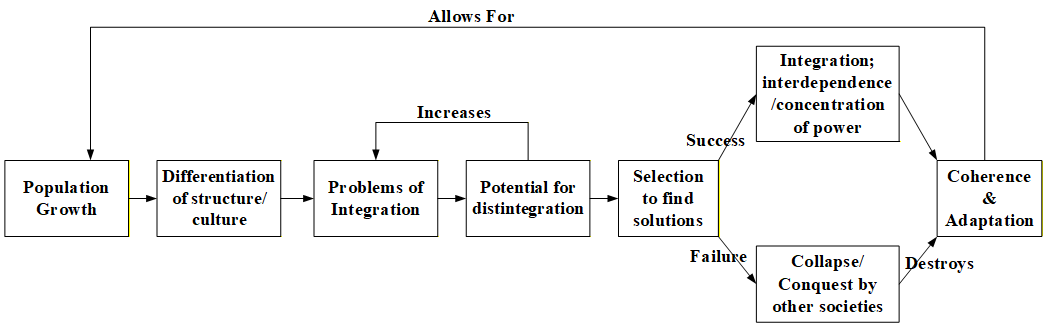
What one sees in this model is something approaching linearity, both as a visual model and in its logic. Indeed, this is how most functionalism presents itself when addressing historical or evolutionary change (e.g., Parsons 1966; Bellah 1970). Spencer, as the functionalist par excellence, is usually treated by sociological texts as the typical progressive evolutionist: Population growth produces differentiation and subsequent problems. However, Spencer’s model – even oversimplified in the above figure – reveals wrinkles that reject linearity and ultimately elude the teleological fallacy committed by Marx and most other classical evolutionists. Where they read history as inevitable, Spencer routinely casts doubt on the inevitability of adaptive solutions, showing that history was full of failure. Indeed, Spencer is pessimistic about humanity’s chances, and in many places suggests collapse, conquest, or absorption is the more likely outcome of exigencies. Moreover, he recognizes failure is not necessarily immediately catastrophic in the form of collapse. Humans try, sometimes purposefully and other times unintentionally, to resolve problems – if they identify the problems in the first place and correctly in the second. But, their efforts often temporarily resolve a problem only to bring about new logistical problems that were unpredictable, and which sometimes feedback on the old problem and its solution. In other words, we can be assured that change is inevitable, but that it is never linear. Eventually, the weight of these pressures would break a society internally or, worse, externally as stronger, more nimble and organized societies absorbed or wiped out the weakened society.
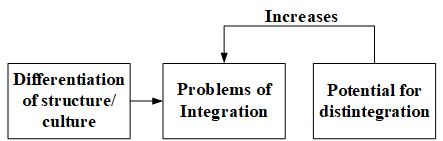
However, Spencer also had a specific theory of evolution (see Sahlins’s essay in Sahlins & Service 1960 for a discussion of general v. specific evolution) that was continuously occurring within these three boxes of his general theory.
Here, Spencer believed a cyclical model of change worked based on two countervailing pressures: to centralize and consolidate power and the opposite pull toward decentralization. As such, his specific theory of evolution began as an effort to explain political evolution or political society, which he recognized was the first non-kinship society to emerge from the 300,000 years of human existence prior (Abrutyn and Turner 2022).
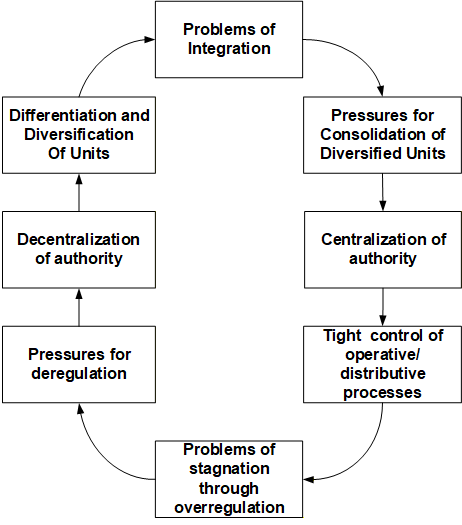
The logic is simple. As groups get bigger in size and density, structural, cultural, and social differentiation are inevitable. This law-like process was not just observed by Spencer, but by Durkheim, Simmel, Marx, and just about anyone who studied small groups, organizations, and societies (Abrutyn 2021). I won’t go into the details as to why this happens, but it does. Structural, cultural, and social differentiation produce problems of solidarity or integration. Heterogeneity quite simply creates greater chances for conflict, animosity, intense competition, and other forces that make social organization unstable. The most common solution in human history (until about 12000-10000 years ago when our Man from Earth became conscious that they were not growing older, just wiser) was fission, or segmentation into smaller social units with some groups staying and other groups going (Fagan 2004). Once people began farming and domesticating animals, it was inevitable that they would eventually become stuck in some places that were more resource-rich than others; geographic circumscription – and later social and cultural circumscription – reduced the possibility of fission (Abrutyn and Lawrence 2010). In this situation, the most common solution was and still is hierarchicalization and the consolidation of power in the hands of one or a small group of people (Lenski 1966; Flannery and Marcus 2012). When groups cannot break into smaller parts, the number of exigencies threatening the viability of the group grows geometrically and there are really few solutions that can deal with a lot of those problems at once besides authorizing a person or persons to make collective decisions about a bunch of things, like making enough food, centralizing risk, redistribution, and coordinating specialized divisions of labor (Polanyi 1956). Or, resolving conflicts between people belonging to very different classes by inventing third-party adjudication systems (Hoebel 1973), building defensive and offensive systems as groups get larger and push other groups into more marginal resource spaces (Earle 1991), and, of course, maintaining the burgeoning class stratification system and protecting some interests over others (Fried 1967).
Spencer, however, recognized from the historical and anthropological record that centralization (or the types of society he identified as militaristic in organization) created new logistical problems. For one, there was a tendency to self-aggrandize and hoard resources. Rome’s fall was partially an illustration of this, as the center overwhelmingly consumed resources from its peripheries, weakening the peripheries and making the center vulnerable to invasion. The Soviet Union is another more modern example (Collins 1981). Another problem was the emergence of inefficiencies, as consolidated social organization reduces the number of groups or individuals capable of identifying, processing, and triaging exigencies. It breeds, in biological evolutionary terms, a lack of diversity and creativity which, again, makes it vulnerable to collapse. And, finally, as Lenski (1966) remarked decades ago, consolidation is always followed by resistance, jealousies, and various efforts to balance the power differential between those in power and those who want power. Stagnation soon follows along with pressures for deregulation and, finally, the decentralization of authority. Put differently, what often feels linear when we construct or reconstruct our narrative of our group’s history is often, in fact, cyclical processes that are not cyclical in the sense of replicating or reproducing the past in fidelity, but rather going through the same processes with varying outcomes.
So, why do I like this model so much? Besides getting to show off my modeling abilities, I think this theory has great explanatory power. It absolutely helps us make sense of the ebb and flow of state formation throughout history. Even today, in the US where powerful forces conspire to consolidate power into the hands of a small cadre of actors, we can be assured that countervailing forces will likely arise that push hard against this trend. We may not be able to predict the outcome, but we can predict the process, while contextualizing it within an understanding that collectives can never find some perfect equilibrium or stasis but are subject to the exigencies that adaptation always produces.
Moreover, we can move this model elsewhere. As a musician and a music lover, much of the 20th century can be understood through the lens of this model. At myriad moments in music history, record companies monopolized the field by buying up smaller companies and consolidating production and distribution. As technological advances were made, it was smaller start-ups that were nimble enough to innovate while the bigger companies were slow and plodding. Over time, the big ones ate the little ones, once again. Car companies also followed this pattern, so too did nascent sports leagues, which were eventually consolidated into singular leagues. And, while these leagues monopolize each respective sport as a product, there continue to be pressures for new leagues, teams, and sports – indeed, every league struggles with stagnation as its product loses luster and its control oversanitizes the sport. Perhaps academic disciplines move according to this rhythm as well. At one point, structural-functionalism had consolidated attention and discourse, but was soon followed by a fragmentary period in the 1970s and 80s. And, while sociology often extols its eclecticism as a virtue, it is also true that certain forms of sociology have become mainstream and have consolidated the flow of resources to the point that fragmentation is more a mythic story than a practical reality.
However, what may be most appealing, and the point I’ll leave you with, is this: sociology, at its best, struggles to resist reproductionist arguments. Outcomes exist because systems produce them, and these outcomes reproduce those systems. This sounds cyclical, but is in fact linear because there is no change, and because there is no change, utopian idyllic worlds are the linear endpoint we can critique the present with. This position ignores the fact that change has been quite common, even if modest at times, and reproduction is rarely in fidelity. Cyclical models break these tendencies. Because cycles are not just endless loops, but more accurately spirals, the inevitability of outcomes is neither preordained nor a simple product of social puppetry. Instead, we can conceptualize gravity-like forces pushing and pulling humans as they make their decisions, but their decisions have a real impact on the immediate social world and, in some cases, radiate outward. On the one hand, people are actually making change all the time amidst the countervailing forces we cannot control, while on the other hand, cyclical models are realistic in that they reduce the likelihood of change being “progressive” or “conservative,” because no matter how well-intentioned people might be, the system pressures themselves operate on their own logic.
I suspect this last point will be what many reject because it strikes at the very heart of linearity in sociology: a proto-Christian theology inherited from everyone’s favorite praxis monster, Marx. Marx, of course, was a Hegelian and Hegel believed society was progressing towards the perfected spirit. A linear narrative founded in myth: we fell from Eden, found redemption, and now have found heaven. Marx didn’t change this linear logic, but simply flipped it on its head and rid it of its alchemy. We were once propertyless (in Eden), sinned (by producing class relations), and will be redeemed (by communalizing property). Heaven was not to be found elsewhere, but on Earth. This linear model permeates so many sociological models, particularly those that are critical by nature. Their epistemic success can be explained easily, but deserves its own essay. Conversely, cyclical models deny an “end of” anything, reject utopianism, and strongly resist the idea of perfecting much of anything. They are realist models that accept the bizarre multilineal paths groups take. Perhaps depressingly, it puts humans on an endless hamster wheel of countervailing forces that seem to rest at the root of human societies, but which provide some theoretical purchase for explaining social change more effectively.


 Seth Abrutyn, PhD